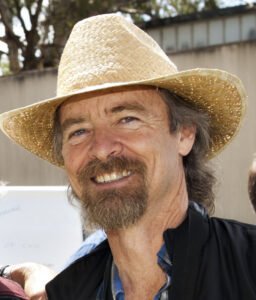
Reflections by Robert Bell
The Australian Industrial Hemp Conference began with an idea in 2017, when Dr Stuart Gordon of CSIRO was organising a forum on Australia’s industrial hemp industry and I was selected as a delegate. I had known Stuart for many years, since his time in Australia’s cotton industry before he joined CSIRO.
I accepted the invitation and attended the forum, where I met remarkable people who were enthusiastic about industrial hemp and its potential to make Australia a major player in the global market. Yet they soon began blaming others for the lack of progress. Each seemed convinced they were right, but that no one else could help.
A couple of days after the forum, I contacted Dr Stuart Gordon and asked him what all these ego trips had to do with the establishment of a credible industry. It was then I suggested a conference with the whole industry supply chain invited. Hopefully, this would lead to more cohesive outcomes.
The timing was pretty good, as Australia and New Zealand had just legalised the use of industrial hemp in human foodstuffs. So, what a great time to start the conference. In February 2018, the inaugural Australian Industrial Hemp Conference took place in Geelong, and a great success it was. Stuart Gordon and I decided that there was currently not enough happening to hold the conference annually, but that every two years would work. We also thought that it should never run in a capital city and should rotate around all the states of Australia, and so the journey began.
The second conference was held in Fremantle, thanks to the generosity of the WA Government. We managed to fight off the major threat of COVID, coming away from the event with only a slight loss but a brilliant event under our belt. The social aspect of the event was certainly coming to the fore, and the hemp fashion show was a highlight. The preview of the hemp wedding dress, which was on its way to the Paris Fashion Show, was really well received. The WA Government gave the local industry tremendous support for the next few years (unfortunately, somehow the national body missed out on this opportunity?).
Stuart and I had often talked about bringing all the event management under the control of the industry, and we used a Tasmanian start-up company to coordinate the event. Although there were some significantly different features at the event, it just missed our ideals. These included a hemp ice cream truck on site, along with a BMW (14 kg of hemp is used in each vehicle), hemp beer, gin and food, sports clothing, shoes, etc. It just managed to miss the boat. By this time, the exhibition connected to the conference and the poster displays had begun to increase. With the usual excellent technical aspect of the conference also gaining pace, the event was really buzzing and was getting a reputation as the industrial hemp event one had to attend. Interestingly, after our third conference held in Tasmania, there was (again) an influx of interest from local government, which was rightly grasped by some of the industrial hemp industry on the Apple Isle. With the emergence of a second national body, the Australian Hemp Council (AHC), some encouragement and assistance was forthcoming from a national body.
Our fourth conference, held in NSW outside a capital city, was another successful event. However, the event managers again wanted us to follow their approach rather than ours. The opening meet-and-greet was encouraging, with leaders of both national bodies discussing cooperation, although we are still waiting for this to materialise. A disappointing incident involved two AIHA executive members who believed they were entitled to free entry and became confrontational when asked to pay or leave. They did not enter the conference but tried to disrupt it by standing outside the venue and blocking other delegates’ access. On a positive note, the exhibition was significantly larger than at previous conferences. There was also an increase in poster presentations, which was great to see. The usual interest from local government increased, and I hope the ongoing talks are proving positive, especially with respect to building, considering the excellent properties hemp building offers in bushfire- and flood-prone regions.
Our 2026 conference was scheduled to be held in Queensland, but more on that later. The Australian Hemp Council approached Stuart and me with a view to working with their organising committee in planning a fibre and construction forum, to be held in 2025. We both agreed, as we saw this might be a solution to one of our dilemmas: getting a good event management team from within the industry, and retaining valuable funds to help improve the industry.
Well, I am pleased to say that working with the AHC on their forum convinced both Stuart and me that here was a possible solution to our quandary: an industry-based event management team to work on the AIHC events, keeping funds within the industry.
Now, about Queensland. Off I went to do a recce of the place, based on information I had received from some of the hemp people there, and I was somewhat disappointed. In the five days I was there, I did not get one good lead. I also realised that time was moving on and we had to do something quickly, so I took the executive decision to come back to Geelong. I think we achieved all we aimed to do, and the majority of the survey replies indicate the same thinking. The conference moved back into the black, so the decision to run with AHC was fully vindicated. So it must be onward and upwards with the AIHC and AHC, with the AHC becoming the owners of the AIHC.

So here’s to the future and our 2028 conference, to be held in Queensland in conjunction with the AHC, and from then on with the AHC taking it over completely.
Robert Bell – November 2026


 We are grateful to the

 The AIHC was conceived and designed by its founder, Robert Bell, to both add value and to assist in the future expansion of the industrial hemp industry and its community.





 Environment
 Health








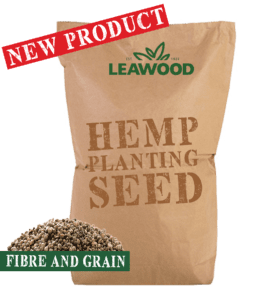 AVAILABLE PLANTING SEED:

 As the Deputy CEO of the Northern Territory Farmers Association (NT Farmers), I am committed to advancing agricultural development in Northern Australia.
 Jaimie Milling is a fourth-generation farmer who has been in the agriculture industry all his life.